A few weeks ago I wrote about the habits that make AI assistants actually useful. This is the sequel, and it comes with a confession: I am not a software engineer. Everything past the second rung of this ladder has meant learning something new that I did not know, usually by trial and error and a lot of restarts.
Vibe coding, the business of describing what you want and letting the model build it, is genuinely brilliant. I have used it to make six things this year, each one a bit more ambitious than the last. Lay them next to each other and they form a ladder. The bottom rungs took minutes. The top rung has taken months, several evenings, most weekends, and one week of a holiday I am not getting back. It still isn’t finished.
That is not a complaint about the tool. It is the actual shape of the thing, and I think it is worth being honest about, because right now the honest version is not always told.
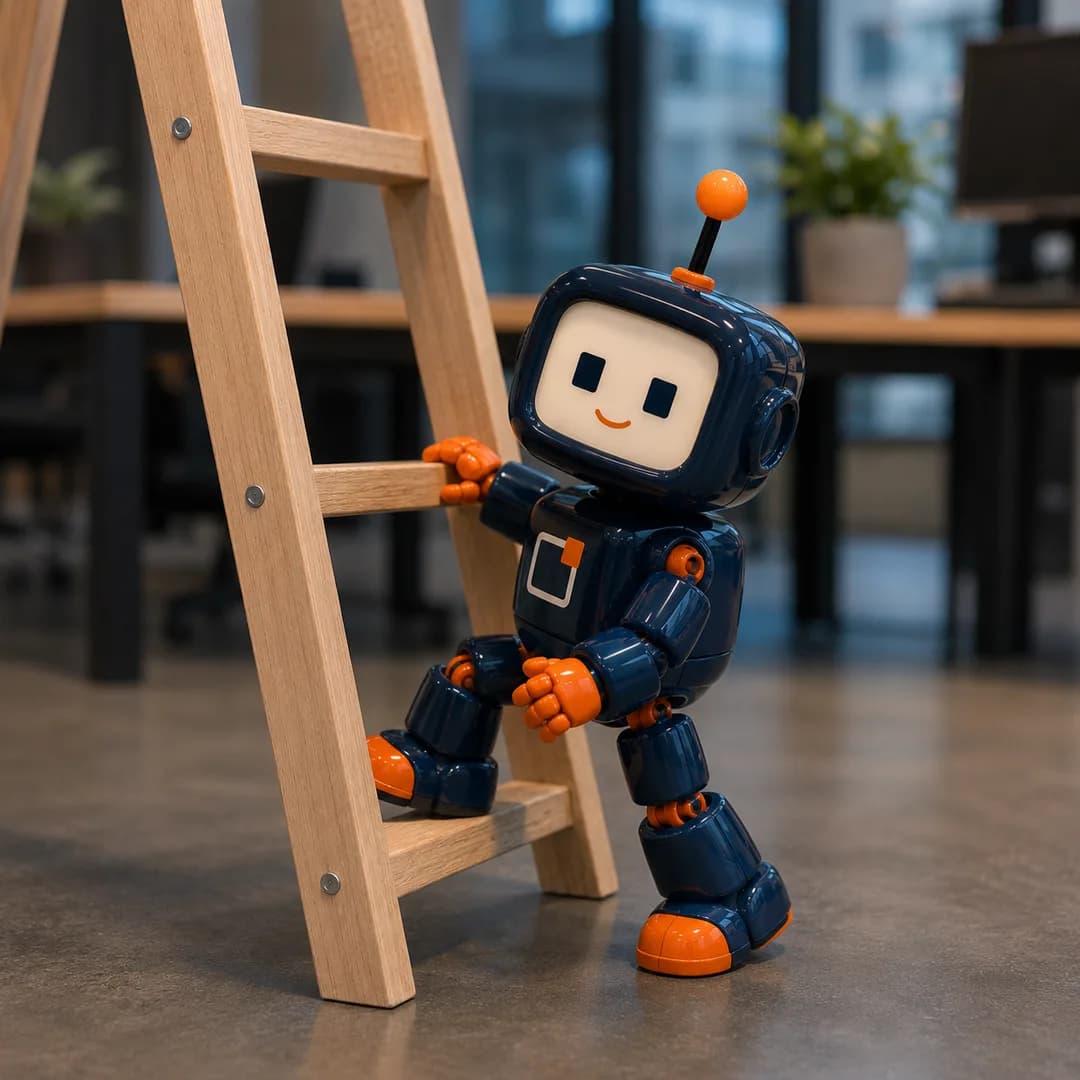
Six rungs, from a thirty-minute wow to a three-month grind
Read them in order. Each one asked a little more of me than the last, and somewhere in the middle the shape of the work changed from asking for things to needing to know things.
My daughter's birthday agenda
Thirty minutes, start to finish. Same-evening build, nothing at stake.
Thirty minutes, start to finish. I wanted to give it to her before the day itself: an inflight manual for her own birthday, something to get excited over while she waited. The wow factor was instant, for both of us.
This is vibe coding at its absolute best. A real need, solutioned in minutes, but nothing really at stake if it didn’t work.
Stompers Netball Fan Club App
Two days. Simple, highly visual, one genuinely brilliant song holding it together.
Two days. Simple, highly visual, no integrations, no agents, one genuinely brilliant song holding the whole thing together. The girls’ team was closing in on the finals and the parents got louder with every win. I wanted to bottle that excitement and hand it back to the girls and their families.
Still mostly vibes. Still built for a need I actually had, which was watching that excitement and wanting to do something with it.
insights-2.com and my own profile
Here the climb started to get hard. A real need is not the same as simple to build.
I wanted to build my own profile site and showcase some of the things I had worked on. I had an old one which had not been shown any love or attention for a few years, so this was the perfect opportunity to port things across.
A design system. An intent behind every choice. Rebuilding my own profile page taught me how hard the simple things actually are once you want them consistent, not just working. Vibe coding got me a first pass in an afternoon. Getting it right took a lot longer than that, and most of the extra time was not spent talking to the AI. It was spent learning what a design system actually was, because I did not know, and no amount of vibing was going to teach me.
SnapDeck
A real product now. The rung where you start needing to know things, not just ask for them.
A real product now. I kept sitting through talks, snapping slides on my phone, meaning to feed them to an AI later. By evening the context had faded: which slide the speaker dwelt on, the point that never made the deck. I built the tool so it stayed fresh instead.
That is the need. The product is where it gets complicated: camera permissions, storage rules, a credits system, privacy promises I actually have to keep. This is the rung where you start needing to know things, not just ask for things. I learned what a credits system needs to guard against mostly by getting it wrong first.
Built to help with my daughter’s maths exam revision, wrapped in the Percy Jackson world she already loves, because the maths alone was never going to hold her attention. Gen AI art, real syllabus content, a tone that has to stay kind by design across hundreds of interactions.
The vibes are still there. They are load-bearing now, not decorative. The gap between “the AI made something that looks right” and “the AI made something that is right, every time, for a nine-year-old, under exam pressure” is where most of the actual work lives.
This is the rung that taught me the lesson.
The proof of concept took two weeks and looked like magic. Three months later I am still spending evenings, weekends, and one whole week of holiday chasing the version I actually want to ship. And the damn thing still isn’t finished.
Multi-agent harnessed delivery, aligned to design standards and business outcomes. The hours. The token burn. Vibe coding got me the demo in a fortnight. It was never going to get me the product, and it was not supposed to. I am not an expert in any of the disciplines this rung actually needs. I am learning agent orchestration, evaluation design, and where a model’s confidence quietly outruns its competence, in public, most weeks a rung behind where I need to be.
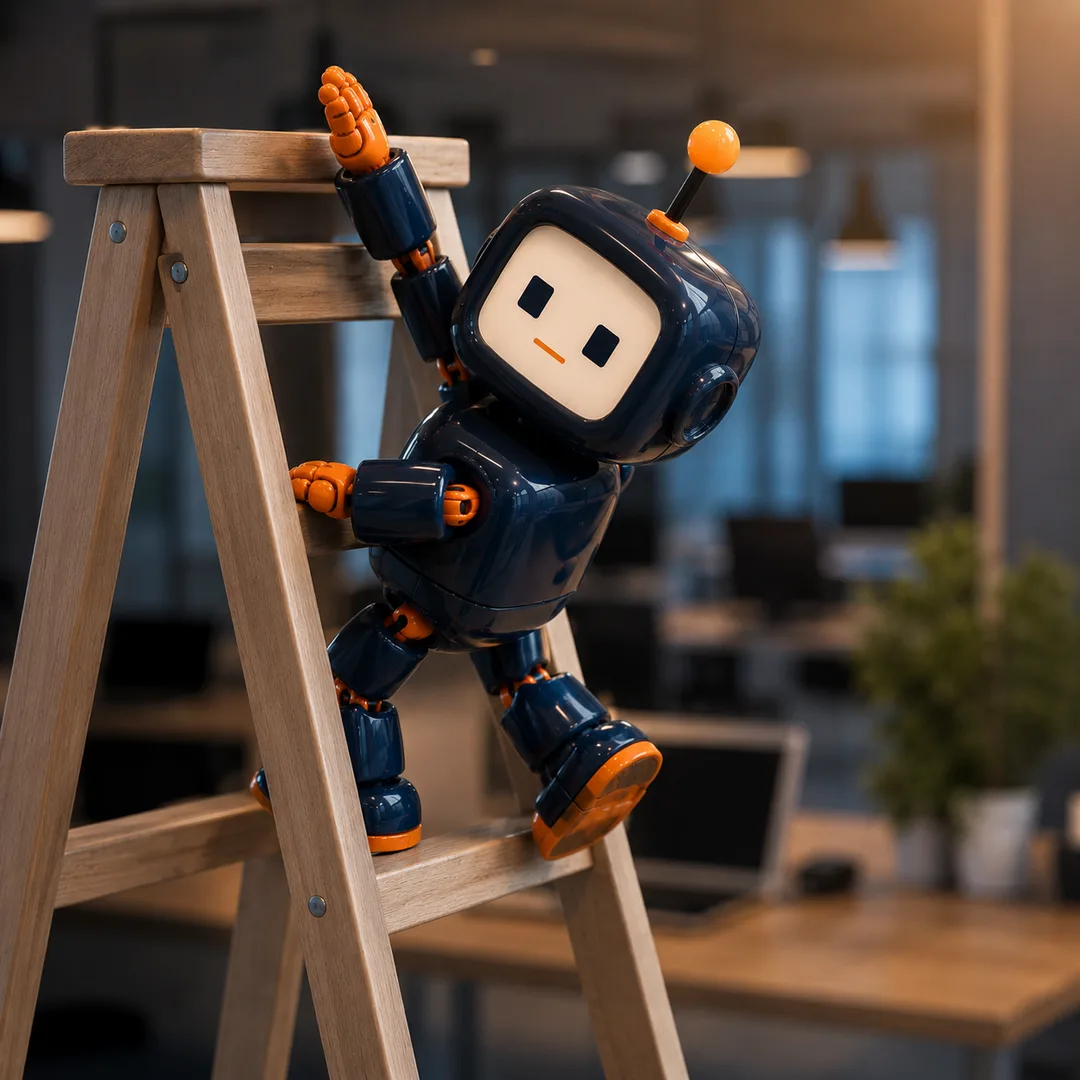
Vibe coding gets you to proof of concept. It does not get you to production.
Vibe coding gets you to proof of concept fast, almost every time. It gets a lot harder once the thing gets complicated, and that is exactly where you need the fundamentals, or need to learn them quickly, because vibes alone do not carry a production system.
MIT’s own research on this found that 95 percent of generative AI pilots inside companies never make it to production.[1] That is not really a story about the models. That is the graveyard of half-finished proofs of concept, at scale, and I have felt every rung of the ladder that leads into it.
The thing that got me up the ladder rather than into the graveyard was not a better prompt. It was building things I actually needed. An excited daughter. A proud team of girls. A CV that told the truth. A talk I did not want to lose. A gap in my own practice. Some of these turned out useful to other people too. That was never the starting point, and I do not think it can be, because the passion is what carries you through the three-month grind instead of leaving your proof of concept to rot with the other 95 percent.
You cannot expect every project to be the thirty-minute wow. Not yet, anyway. Start small, let the wow factor happen, and then pay attention to exactly where the ladder gets harder. I am not writing this from the top of the ladder. I am writing it from partway up it, still learning the rungs I have not reached yet.
Frequently Asked Questions
What is vibe coding?
Vibe coding is the business of describing what you want in plain language and letting an AI model build it, rather than writing the code yourself line by line. It is genuinely brilliant for getting to a working proof of concept fast, often in minutes. The open question is not whether it works, but how far up the ladder of real-world complexity it carries you before you need the fundamentals underneath it.
Does vibe coding scale to production?
Not on its own. Vibe coding gets you to a proof of concept fast, almost every time. It gets a lot harder once the thing gets complicated: camera permissions, storage rules, a credits system, evaluation, agent orchestration, promises you actually have to keep. That is exactly where you need the fundamentals, or need to learn them quickly, because vibes alone do not carry a production system. The demo is a fortnight. The product is months.
Why do most AI projects never reach production?
MIT's State of AI in Business 2025 research found that 95 percent of generative AI pilots inside companies never make it to production. That is not really a story about the models. It is the graveyard of half-finished proofs of concept, at scale. The thing that gets a project up the ladder rather than into that graveyard is rarely a better prompt. It is building something you actually need, because the passion is what carries you through the long grind after the demo.
How do you get past a proof of concept built with AI?
Start small, let the wow factor happen, and then pay attention to exactly where the ladder gets harder. Build things you genuinely need, so the motivation survives the three-month grind. And accept that past the first couple of rungs you will have to learn the disciplines the project actually needs, usually by getting them wrong first. The proof of concept is the easy part. Everything after it is the real work.
The habits underneath the ladder.
This piece is a sequel. The one it follows sets out the five habits that make an AI assistant actually useful, from leading with context to keeping a human in the loop.
Read Five Tips for Working with AIMark Cunningham is the founder of Insights². He has spent more than a decade building data and analytics products, and rather too many recent evenings, weekends and holidays finding out exactly where these tools stop carrying you. He writes at insights-2.com about how to make the meaningful measurable.